From Penpals To Family: A Story of Mutual Transformation
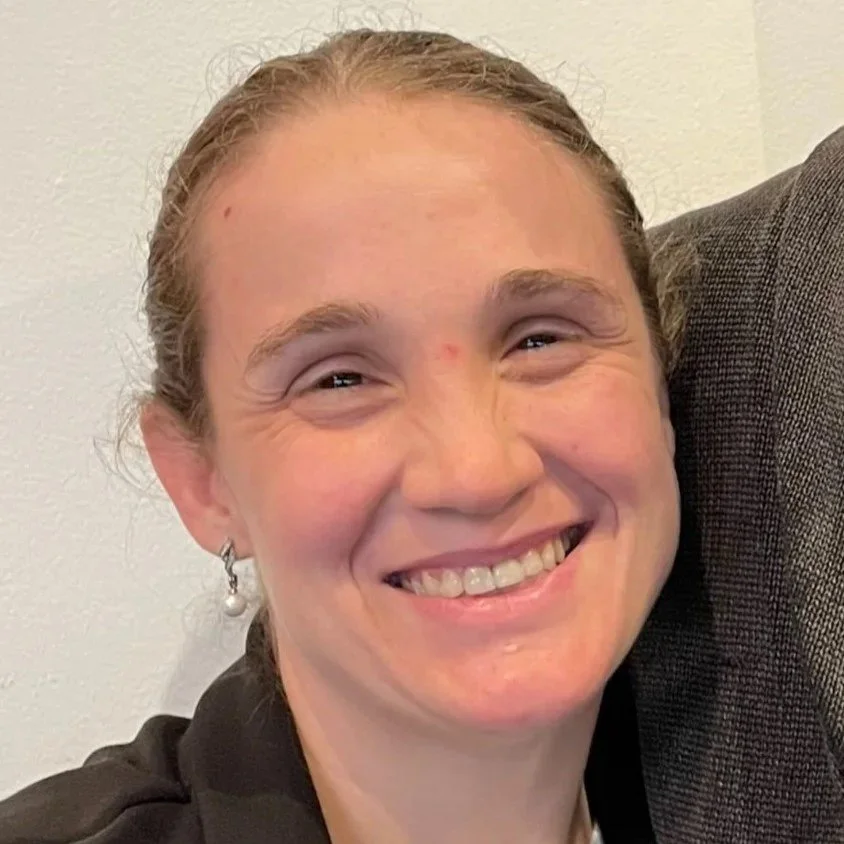
Hi friends,
My name is Candice Baughman and I’m a Parish Mobilizer for One Parish One Prisoner. In 2020, I was still incarcerated. Today, I’m in a different church almost every Sunday. Sometimes, I have to stop and catch my breath because I still can’t believe this is my life. Every week, I walk into sanctuaries and fellowship halls and sit down with people who are just beginning to say yes to One Parish One Prisoner.
We often think One Parish One Prisoner changes the lives of people like me, people coming home from prison, stepping into a world full of barriers, paperwork, closed doors, and quiet shame. And it does. But, that’s only half the story.
The other half belongs to the people in churches. The ones who say yes without knowing exactly what they’re signing up for. The ones whose lives begin to change in ways they never expected. Those stories don’t always get told but I hear them.
One of those stories belongs to Virginia.
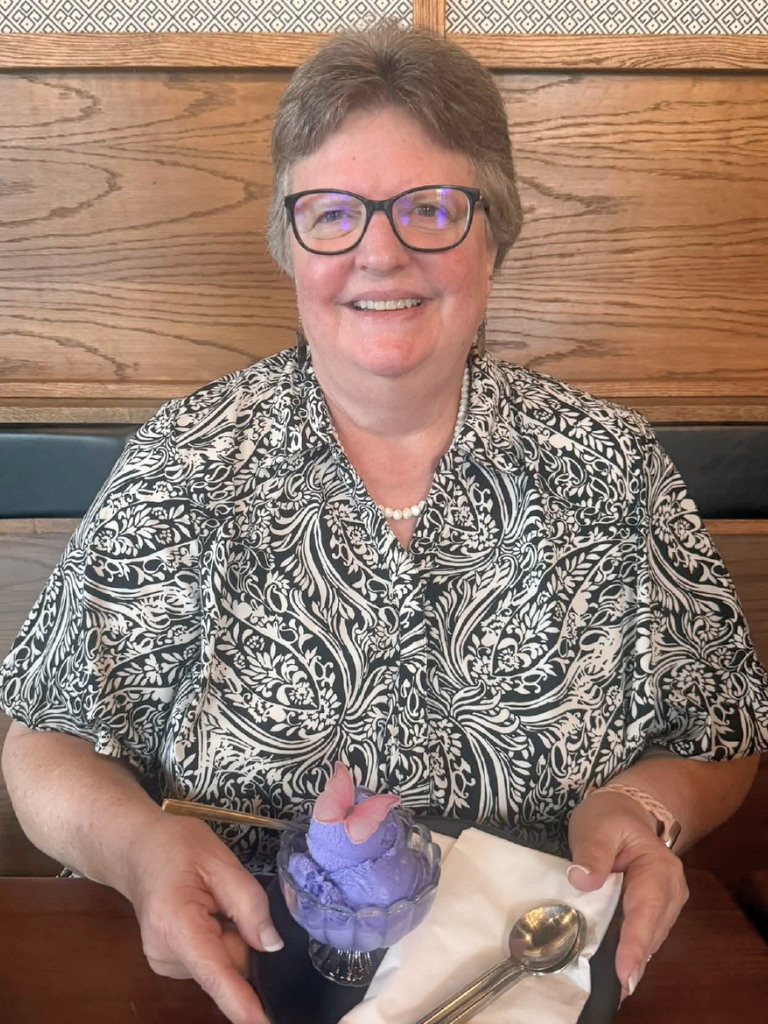
When you first meet Virginia, you notice her warmth right away.
She’s cheerful, laughs easily, and has the kind of presence that makes you feel welcome without trying.
When Virginia first told me the story of how One Parish One Prisoner entered her life, she laughed a little, not because it was dramatic, but because it was ordinary. It didn’t begin with a big moment or a clear calling. It began the way so many important things do: with exhaustion, uncertainty, and a simple invitation at a time when she wasn’t sure she had much left to give.
It was during the pandemic. She and her pastor were burned out. When our Programs Manager, Alvin, reached out through a priest connected to St. Andrew’s Church in Vancouver, it didn’t come with pressure. It was just an invitation to talk. Virginia remembers thinking, “I don’t think I can take on one more thing.”
But, as the conversation unfolded, something landed.
She shared, almost in passing, that her brother had been incarcerated. And suddenly, the shape of the work came into focus. Not as an idea but as something painfully personal. Her brother lived for decades in the cycle so many families know too well: addiction, incarceration, release, and then back again. He was intelligent. Skilled. Deeply loved. While he was inside, he was sober. He found purpose. He even thrived. But every time he came home, he returned to the same people, the same places, the same patterns.
Virginia says it plainly: “As soon as he was released, he fell back into old habits. Same people. Same addiction.”
The night before he was supposed to report back to jail, he died of sudden cardiac arrest, still in his addiction. When Virginia learned more about One Parish One Prisoner, she didn’t hear a program. She saw what her brother never had.
Not services. Not advice. Not good intentions. But people who would stay. Stay by someone’s side as they emerged from a place most people fear.
“That would have made a huge difference,” she said. “A huge difference.”
So she said yes, but carefully.
“I remember telling Alvin, ‘I’ll just do this for a while. I’ll write a letter or two. We’ll see how it goes,’” she told me. “I was really tired. I wasn’t sure I could commit to much more than that.”
Virginia was paired with Maria, a woman incarcerated at Washington Corrections Center for Women.
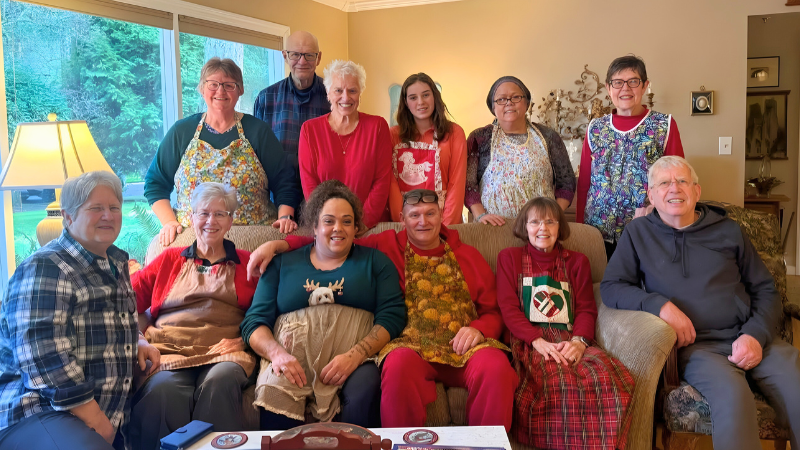
Virginia (top row, left) and Maria (bottom row, third from left) and OPOP team enjoy a holiday gathering.
Letters turned into visits. Visits turned into phone calls. Eventually, Maria stayed in Virginia’s home when she came into town. She became part of daily life. Meals. Conversations. Holidays. At some point along the way, the language changed. Virginia doesn’t say Maria is like her daughter. She says, simply, “Maria is my daughter.”
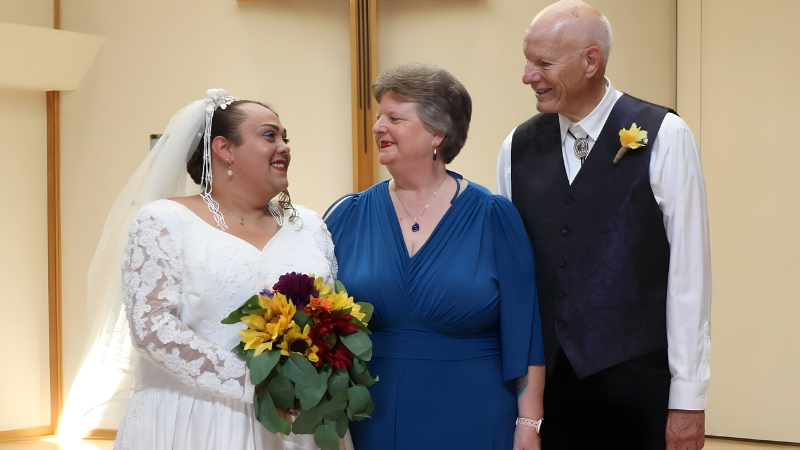
When Virginia said that to me in the interview, it stopped me cold. Especially when, a little later, I learned that Virginia never had children. She had always thought she would. Life just didn’t unfold that way. And then, through this relationship, something she never expected arrived. Maria fell in love. She got engaged. And Virginia didn’t step in as a helper; she stepped in as family. She helped plan the wedding. She handled logistics. She protected Maria’s peace.
“Nobody went to Maria with problems,” Virginia said, laughing. “They all came to me.”
And then Virginia said something that made my breath catch.
“She wore my wedding dress.”
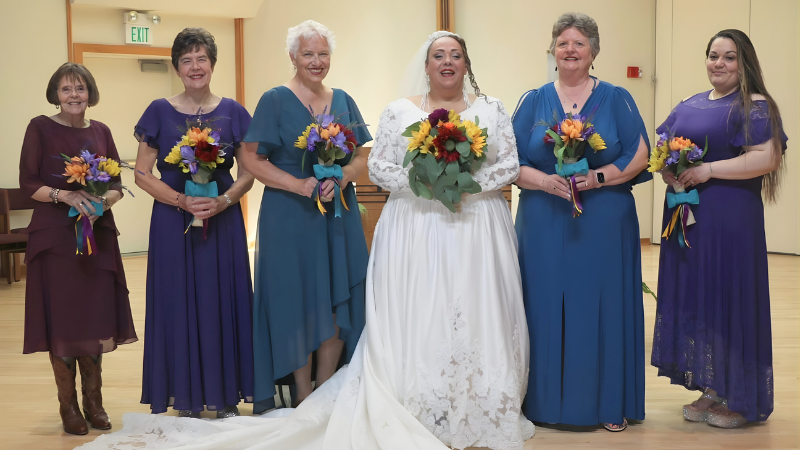
Virginia offered up the dress gently, mostly to help Maria save money. And Maria’s response still brings tears to Virginia’s eyes.
“She said, ‘If I had every wedding dress in the world in front of me, this is the one I would choose.’”
On Maria’s wedding day, Virginia stood beside her as matron of honor making sure the day was full of joy, not stress. Making sure the past didn’t steal what the present was offering. That wedding became something even bigger than a celebration. Family members who had been estranged for years came together. Reconciliation happened in real time. Love showed up where addiction and separation had once lived.
“It was magical,” Virginia said quietly.
And the story didn’t stop there.
Virginia’s church didn’t just start one OPOP team—they are working on launching another. They began supporting the HOPE Team inside the prison, a peer-led group caring for elderly and seriously ill incarcerated women. They sent funds. They showed up. The circle kept widening.
Virginia often describes all of this through the story of Lazarus.
She says reentry isn’t just being called out of the tomb. It isn’t just “rolling away the stone,” like housing barriers.
“It’s the unbinding,” she told me. “Taking off the grave clothes one piece at a time.”
Fear. Shame. Systems that still hold tight even after the door opens.
“OPOP,” she said, “is people willing to stand close enough to help with the
unbinding.”
When I listen to Virginia tell this story, what moves me most is not just what happened to Maria, but what happened to everyone else.
Virginia told me plainly, “I feel like I’ve made more of a difference through this program than I ever did professionally.”
That’s mutual transformation.
Mutual transformation is one of our core values at Underground Ministries. To some, that phrase may sound like a hopeful idea or something we say because it feels theologically right. But Virginia’s story is not an isolated one. It is one of many.
I hear echoes of it in churches across the state, in letters from inside prison, and in conversations with people who have decided to step closer instead of turning away. Over and over again, I see the same truth unfold: when people commit to staying in relationship, everyone is changed. Not all at once. Not perfectly. But deeply. And every time I hear Virginia tell her story, every time I see what grew from a simple yes, I remember why I do this work. And why I believe so strongly that transformation—real transformation—is always mutual.
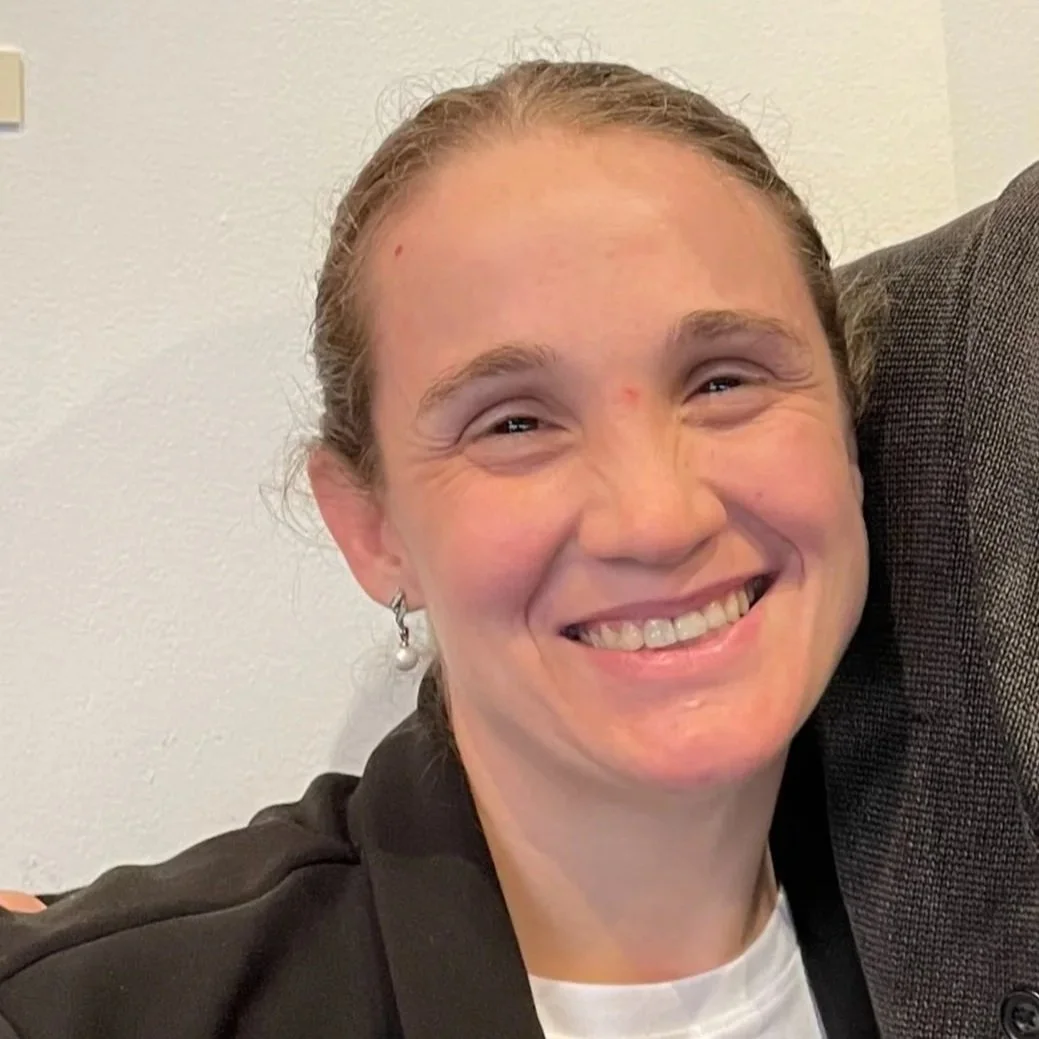
Candice Baughman
Parish Mobilizer, One Parish One Prisoner