
BOOK 1: RELATIONSHIP WITH THE UNDERGROUND
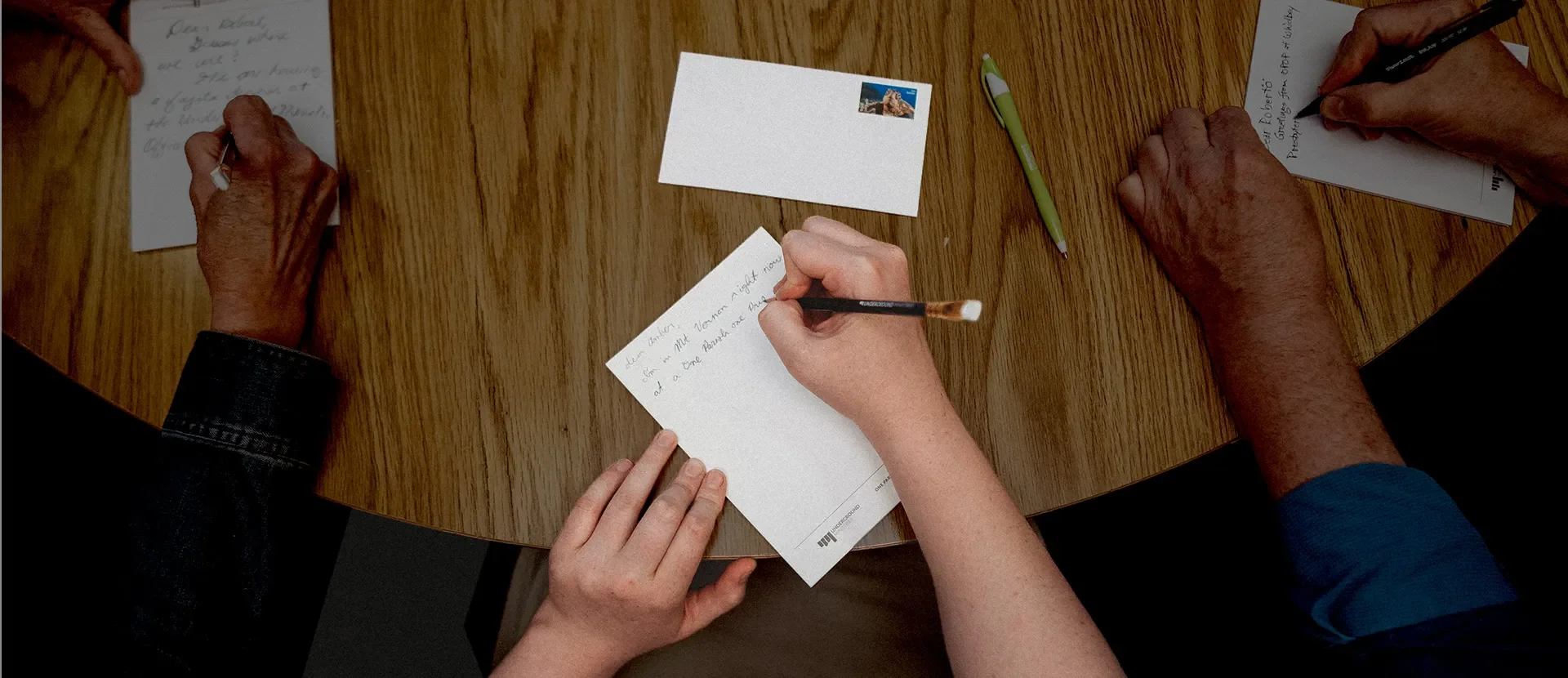
Prison letters are how we start new relationships.
They also make up much of the New Testament.
They’re catalysts for deeper change.

A LOST ART
You, dear reader, whether you are a parish team member or a releasing friend, might be a little nervous.
Or: “scared as hell!” as one thirty-something team member described it. But two months later she reported, “I talk about things in my letters with Wally now that I don’t really talk about with anyone else in my life. It’s my favorite part of the week.”
There’s a quality of connection in written correspondence that can be—and often is—much better, much deeper, than live conversation. In an age of texts, tweets, and emails, we have lost this gorgeous form of communication, and we are missing out. Prison letters are just about the only place where the form still exists today.
Letters are where we in One Parish One Prisoner discover each other. Written correspondence has been the foundation of our work with our friends in prison and their OPOP team, and a trusted place of joy and honesty. Letters are where initial trust is built, which is essential for the road of reentry ahead.
We get out paper. We say hello. We say something about ourselves. We realize things as we write. We ask questions that invite a response. On the front of the envelope, we write the name and address of someone forgotten to the world. The letter slides under the door, many miles away, into the prison cell. A friendship opens. The prison walls between us—and within us—weaken.
Letters are one of the most basic forms of human connection. And letters are the simplest keys to unlock the modern prison tombs.
FRIENDSHIP WITH THE BURIED
“This is the land of the forgotten, right here,” a man named Ramon once told me through the bullet-proof glass during a supervised visit in a remote prison, both of us holding black phones to our ears as we spoke.
“This is the realm of the dead, bro.” He leaned back from the glass and looked around. “We’re dead to society. To our family and friends. Any time you wanna take the time to talk to me, write to me, take my call—you’re resurrecting the dead, homie. I come alive again. Somebody knows I’m still in here.”
That’s it.
This entire journey is based on the story of Jesus mobilizing the local community to participate in welcoming their friend Lazarus out of the tombs. It’s in John’s Gospel, chapter 11. We went over it in your kickoff orientation. It’s the structure of the learning modules on the menu page. This is our resurrection blueprint.
It begins with “approaching the tombs.” You’ve done that. You’ve said yes, drawn close as a community to one person inside prison, about to come home.
Now, you are building a friendship with this person. With letters. Then phone calls. Then visits. Friendship is the power that drives the resurrection mystery in our story.
It’s Jesus’ friendship with Lazarus that leads him to the tombs where his buddy is buried. It’s friendship that leads Jesus to weep, standing on the outside among the community who also loves Lazarus. And it’s friendship that unlocks the organized community resurrection work ahead.
If you just attend the meetings, read the Learning Modules, pray for this person, you’re not doing One Parish One Prisoner. Relationship is where it begins. Friendship is the quality of relationship Jesus shows us.
So this Learning Module is your first, to help you—both team members on the outside and releasing friend on the inside—start this journey together.
OUR GOAL: RELATIONSHIPS OF TRUST
Remember, trust will need to be built both ways.
It’s not just those on the outside who might have questions, like, “Is this person going to be honest with me? Or scam me or try to get something out of me? Will I and my family be safe?”
Individuals in prison also have been burnt, and are likely to wonder as we begin, "Is this just a nice person in the community, doing something to feel better about themselves? Am I being used? Or do these people really want to get to know me, the real me? Will they really be people I can rely on in the years ahead?"
These questions are normal. Each letter is an opportunity to become real people to each other, where conversation can grow over time, and fears disappear.
So a great way to begin letters on both sides of the envelope is sharing your “why”: why you wanted to step into this journey with someone you’ve never met before. What part of your story led you here? What are you hoping for? What are you wanting to learn? What are you afraid of?
In one of our first OPOP Kickoff Orientations, a new congregant asked our longtime friend Alex — who wrote to us for years while he was in maximum-security prison, and who now leads Underground’s local reentry programs — what he thought a “good letter” was.
Alex answered,
“A good letter was whenever someone reached out
and really wanted to know what’s going on in me.So, when you write a letter, don’t overthink it.
Just speak to them how you would speak to someone you care about.
Like a friend.Be brutally honest.
Be sincere.What you’ve already given them is ten times better
than what the streets have shown them.”
Here are three words to keep in mind through the journey ahead:
consistency + curiosity + connection.
We’ll come back to them over and over again. They will help point us toward the connection we seek.
CONSISTENCY
Many folks carry a deep wound of abandonment—parishioner and prisoner alike. They’ve been dropped or forgotten repeatedly. We team members can be part of healing this wound or deepening it. It can be devastating for anyone to begin a relationship, and then have it terminated because the person on the other end lost interest or got too busy to stay in touch. Imagine this happens while you’re in prison. Consistency, then, is even more important than the content of our letters. It communicates to all of us that we are valuable; not disposable or forgettable.
In short: don’t worry about saying the wrong thing; instead, just avoid being flaky. Simply “show up” regularly, over time, with letters .
So pick a day of the week— every other week, maybe a specific time of day. Put it on the calendar. (Seriously. Stop and do this now.)
Watch this quick video of a team member reviewing her year’s worth of letters with her released friend, Paul—now home and sitting at her kitchen table his first week out. This is consistency.
CURIOSITY
We’re not here to give advice, to coach, mentor, or correct. We are not the Department of Corrections. We are more like a Department of CONNECTIONS! We listen! Everyone is new here. We may learn something that concerns or bothers us. The holiest stance is to be curious. To wonder, with compassion: What’s the story that has brought this person to this belief, desire, action, or attitude? Do I have assumptions that I get to re-examine?
Curiosity frees us from judgment, and opens the gift of better questions. Learn to ask open-ended questions to create a welcoming space of authenticity.
If you don’t have any understanding of something the other is describing, great! What an opportunity to say, “I know nothing about that. What’s that like? Can you tell me more?”
CONNECTION
Connection is what we have in common. The, “oh, me too!” moments. Like an OPOP participant who told me he realized in the first letter that though both he and his incarcerated friend lived in Kirkland, WA, both of them grew up in Long Beach, California! “And we’re both Dodgers fans!” They took off from there: both had raised teen daughters, both grew up in families with addiction and incarceration on one side, and a blue collar Catholic family on the other. Both were college educated but struggled with fractured relationships. These men became real to each other.
A home schooling mom found deep connection with a man in solitary confinement: she shared that she, too, had severe mental health struggles in her story. Sunday afternoon collect calls became their “mental health buddy” time, where they’d look forward to laughing and recounting where their anxieties or paranoias got the best of them that week. This was a healing experience for both of them.
Seek connections between your experience and the other’s. We call this kinship: belonging to each other. We aren’t helpers and we aren’t projects to be fixed. Beneath incredibly different life experiences, we might find an equality of heart. The joy, the fun, is in discovering this. You just being your authentic self invites others to the same.
We are the Department of Connections. We’re discovering this not by reading a book about it, but by reading each other’s letters and experiencing it.
“My humanity is bound up in yours, for we can only be human together.”
— Archbishop Desmond Tutu
QUICK QUESTION
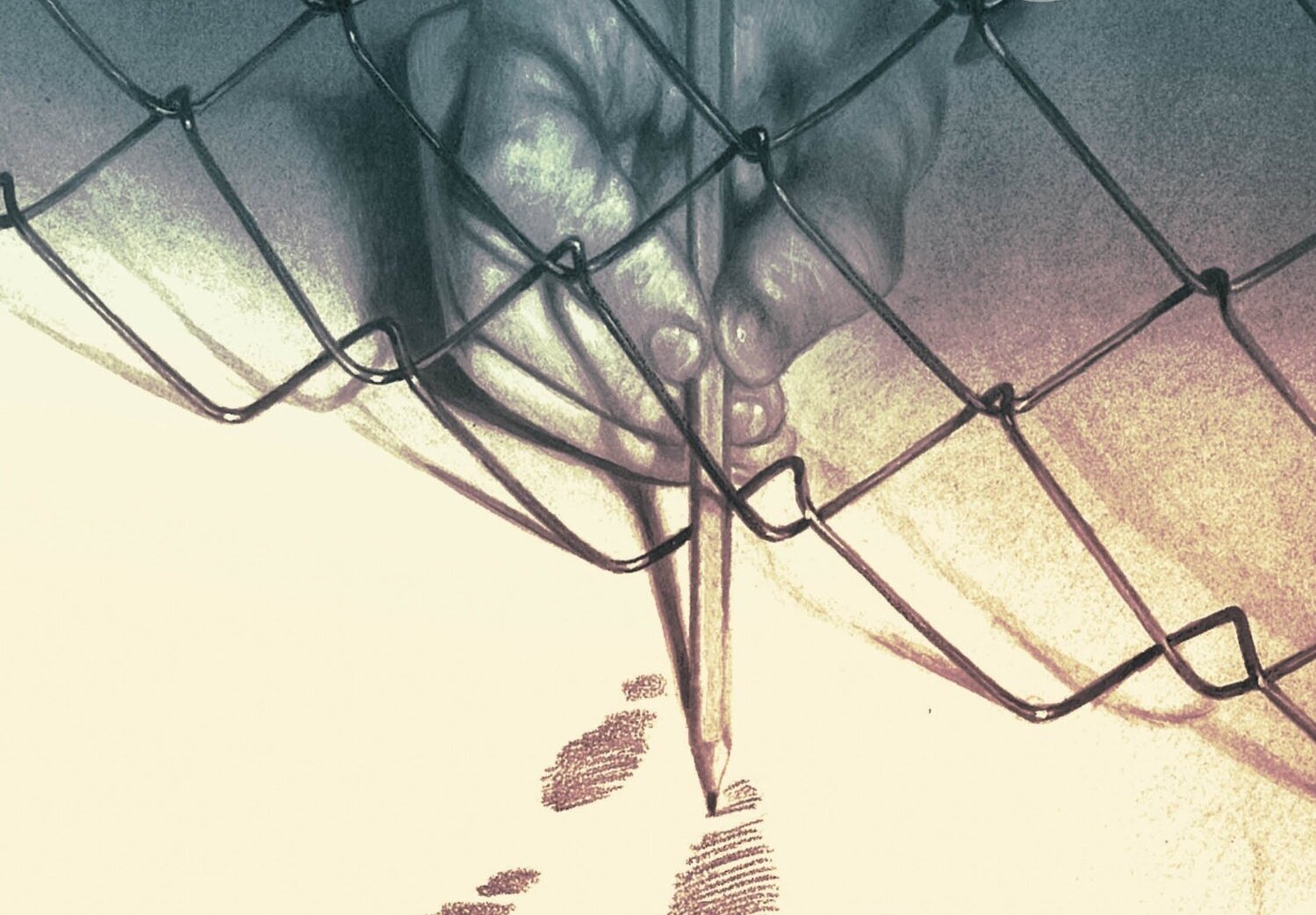
PRISON LETTERS ARE RADICAL
Much of the New Testament—what Christians have called holy scripture—are epistles, or letters. Many were written by a formerly violent aggressor (Paul the Apostle) trying to describe something new that was happening inside him, trying to build trusting relationships with new communities—many of whom suffered great violence because of him.
We are participating in this story, now, in the same form: through prison letters.
Many OPOP congregations and small groups have begun sharing portions of their releasing friends’ prison letters as a “Now Testament Epistle” during the Sunday service. Folks in the community smile when they’re reminded what epistles are—then they sit up and hear fresh words from a sibling in prison, addressed directly to them, their specific community. This is a living tradition.
We are also dipping into a historic tradition: Dietrich Bonhoeffer’s “Letters and Papers from Prison”; Martin Luther King Jr’s iconic “Letter from Birmingham Jail”, not to mention the prophet Jeremiah’s written oracles from the pit and the chained stocks.
Our tradition repeatedly dares to say: The word of the Lord might not just go into prisons, but be coming from prisons. Why would we want to miss out?
Writing letters into prison is to be in fellowship with those in the “hell” society has built: the underworld, the realm of darkness and torment and punishment, cut off from the land of the living. With your letters, you are joining Jesus’ divine movement through the gates of Hades. (Matthew 16:18)
Don’t be afraid. Jesus says this a lot.
A STORY
Here’s a beautiful story from our friends at Plough about a rural family’s young daughter starting to write to a man on death row. It started a relationship that spanned a decade and drew in the entire family. (Take note: it’s ok to involve your kids, if you want.)

PROMPTS TO START
Below are some ideas to prompt the kind of letters worth writing—and reading; where you hopefully see yourself anew in the correspondence.
Why Are You Doing This?
Imagine a stranger saying they want to be your friend and help you out of a difficult situation. Would your first reaction be total openness? Or might you have some skepticism? When we start writing letters to one another, it is essential that we be as honest as we can. Why did you say yes to the OPOP experience? What motivates you? What fears or hesitations do you have? You’ve already answered these questions in the application, the registration, and the team Kickoff. It’s an easy way to dive into your first letters.
A Day in the Life
One way to introduce ourselves and discover each other is to simply describe a day in your life this last week; the basic routines, something that made your week, or a setback. Ask your new friend for the same. Our worlds are different in many ways at this point. Let’s learn.
The Zo is a 3-part animated series exploring the disorienting experience of prison, likened by one inmate to living in “The Twilight Zone”. The first episode, “Induction” (shown below), reveals how prison guards and administrators employ deliberate bureaucratic paradoxes to undermine inmates’ sense of reality and self. It’s a brilliant 5-minute depiction of “a day in the life” on the inside.
A Turning Point
Those leaving the underground are very aware of the need or pressure to “change” their lives. Was there a point in your story when you faced yourself in the mirror and knew something had to change? Maybe you weren’t on hard drugs or in prison, but do you have a turning point (not just when you came to faith)? What struggles did you face? How many tries did it take?
Laughter
What makes us laugh is often layered with story about us. What made you laugh this week? Share that. Ask your friend to share a story of what made them laugh.
Freedom to Talk About Hard Stuff
Often people writing to those locked up share something heavy—something that they’ve never shared with family or friends in church. This is powerful. A chance to share past or present struggles outside the “nice” bounds of church, not be judged and avoided, and model to them our own imperfect humanity. Honesty invites honesty. See what happens.
“You are only as sick as the secrets you keep.”
— Twelve Steps / AA saying
TECHNICAL STUFF
This is for parish team members to know and incarcerated folks to correct or affirm. Let’s all be on the same page!
ENVELOPES
You can type or handwrite your letters; please use simple paper and envelopes only. Fancy cards or ones with adhesive, glitter, or stickers are often rejected. NO extra design or flourish on the envelope, please; corrections departments don’t like that.
Click on your state below for address instructions.
-
Make sure you put your full name and return address in the lefthand corner. (You can use the church address at first, if you prefer.)
Address the “To” section like this:
Full Name + DOC #
Name of Prison Facility
Address 1
Address 2 -
Make sure you put your full name and return address in the lefthand corner. (You can use the church address at first, if you prefer.)
Address the “To” section like this:
Full Name + iDOC #
Name of Prison Facility
Address 1
Address 2 -
Make sure you put your full name and return address in the lefthand corner. (You can use the church address at first, if you prefer.)
Address the “To” section like this:
Texas Department of Criminal Justice
Friend’s Full First and Last Name + TDCJ Number
PO Box 660400
Dallas, TX 75266-0400
Once TDCJ receives the letter, it will be scanned in and sent to the friend’s tablet.
POSTAGE
Folks in prison are supposed to get a set number of pre-stamped USPS envelopes at set times, but this can vary a lot . At the start of a team’s journey, It’s pretty common for us at Underground to hear from releasing folks that they got a bunch of letters from the team, but can’t reply until they get the next month’s supply of stamped envelopes.
So, let’s eliminate the wait by filling their postage account right away!
-
That happens via JPay: www.jpay.com
Select state, enter ID number, click Next, then select the individual.
Enter email, create a password, click Register.
Enter $ amount, click Next.
Complete Profile, click Continue.
Under Transfer Category, select Postage, then Continue.
Confirm $ amount, click Continue. A processing fee will be added to the total amount.
Enter payment method, and click Submit.
The first parish team member to read this, let the rest of the team know that you’re creating a JPay account, and get $10 in there for postage! .
Please do not add money to any other accounts—only postage. -
Go to the Western Union Money Order for inmates page.
Enter the facility – Illinois Department of Corrections – the $ amount, inmate’s full name, and iDOC number. In the Middle Name space, write FOR POSTAGE in all caps.
Select payment type, then Continue, then Login if you have an account already, or click Register under the Login button to create an account.
Enter payment info and submit and you’ll get a confirmation page with a tracking number. Mail that number to your incarcerated friend, or pass it on to us (dexter@undergroundministries.org) and we’ll get it to them quickly.
Please do not add money to any other accounts—only postage.
-
TDCJ will sometimes provide letter-writing supplies to inmates, but with their predominant use of tablets, we want to use the technology that will work best for communication. Right now that is email, or eMessaging.
Sending eMessages is done through an online system called Securus.
You can sign up for a Securus account here: https://securustech.online/#/login
Click and follow the prompts to get set up; have your friend’s TDCJ number handy!
Electronic stamps must be purchased to send eMessages. Stamp prices are set by the vendor and are subject to change. We recommend that every time you send an eMessage, you pay for a return stamp, which will cover your friend eMessaging you back. To do this, click on Total Stamps and then select Transfer. You’ll select the contact name and number of stamps you wish to transfer. This will help communication run smoothly.
Please do not add money to any other accounts—only postage.
Securus has a lot of other features besides eMessaging. Explore a little!
PHOTOS
We strongly encourage you to send photos as often as you can. Photos from the outside are gold for our friends inside prison!
Click on your state for specific rules prisons have around sending photos.
-
No more than four in each envelope.
Nothing that will create a disruption for incarcerated folks – explicit or provocative material, images of violence, etc.
Write your friend’s LAST NAME and DOC NUMBER on the back of each photo you send.
-
No more than 3 photos per envelope.
Write your friend’s last name and iDOC number on the back of each photo
Nothing that will create a disruption for incarcerated folks – explicit or provocative material, images of violence, etc.
-
Through Securus you can send as many photos as you want!
Please don’t send photos that will create a disruption for incarcerated folks – explicit or provocative material, images of violence, etc.
Enjoy the letter writing process! We are starting with only written communication and photos. Soon you will have the option to call, e-mail, video call, and send books to your friend. You can find more in the "Through the Gates" module.
A WORD ABOUT MONEY
A key component of our program is avoiding, as much as we can, the entanglements of the Giver/Asker dynamics that come with money and resources. Why? So that we create a space for strings-free relationships, without money altering or damaging the process.
Parishioners: we do not send money to inmates’ accounts, food packages, phone accounts, or girlfriends/boyfriends outside prison. None of that–we don’t do it.
Incarcerated friends: please don’t ask for money. This might not make sense now, and we acknowledge how difficult it is to go without things you need and want while incarcerated, but trust the process. As our formerly incarcerated staff confirms, you will be grateful later that you didn't ask your new friends for money now.
Please understand and respect these rules. This is policy.
At this point, the OPOP team should ONLY be funding postage for our incarcerated team member. After release, there will be lots of opportunities to help our friend out financially as they take on the obstacles of reentry. Right now, it’s about building a friendship free of money concerns. That way, it’s always about relationships, not resources.
A WORD ABOUT PASSING ALONG MESSAGES
We don’t relay messages. Not even, “Hey, can you call so-and-so and have them put money on my account?” OPOP Team members are not personal secretaries. We don’t handle social media accounts on behalf of folks inside, either. Please understand this clearly, team members: do not make contact with family members or friends on behalf of releasing friends. In some cases, NO CONTACT orders exist, and this violates them.
Releasing friends: if you want to introduce the team to a supportive family member or a helpful friend on the outside, please reach out to that person directly first to make sure it’s okay. Then provide their contact information to your team to reach out to them and get to know them, if they both want that.
ACTION STEPS
PRINT & MAIL THIS MODULE TO YOUR FRIEND
WRITE YOUR NEW FRIEND
SEND A PHOTO OF YOURSELF! Say why you chose this photo—maybe a family photo, you with your dog, or at your favorite lake. This is a window you’re opening to your life.
DISPLAY! Put your new friend’s photo up somewhere you can see it—on your fridge, wall, or cell bunk.
CONGREGATIONAL CONNECTION: Tell one friend (your cellie, a fellow parishioner) about the experience of writing/reading your first letter. Tell them why you’re doing this.
FOR TEAM DISCUSSION
Make sure everyone got their first letter sent out. Now share with each other: What did you say? How did you feel? Share your hesitations, awkward fears—then encourage each other to talk about exactly that in the next letter! Did anybody receive a reply already? What did it say?
How might this experience of writing a letter with someone you don’t know personally give you new eyes for those letters to the people in Ephesus, Corinth, Rome, and Galatia? Can you think of other famous letters in the history of other religious and social movements?
FOR REFLECTION
