
BOOK 1: RELATIONSHIP WITH THE UNDERGROUND
“What was their crime?”
Storytelling goes both ways.
“We get to be real with our stuff, too. ”
— One Parish One Prisoner team member
TELLING THE STORY
Part of being incarcerated is having to face your past and your harmful actions. It's not hidden: the charges are public. If anyone wants to get to know you while in prison, they know you did something, you were charged with a crime of some sort.
That unspoken awareness of one person being Guilty Of Something (as opposed to the rest of “us”?) is often an invisible gulf separating “Us” from “Them.”
It's a question not only lawyers and judges ask before sentencing, but friends, family, employers after release: "What'd you DO?" “What were you in for?”
As a chaplain for many years, I never felt a need to know. But as we've worked with more One Parish One Prisoner communities building relationship with someone inside a prison, I've found it's a question that eventually must be confronted, to build trust.
So: we might as well take this as an opportunity to do it well –to answer the question of the past, the harm done– without people Googling public records and old newspaper articles on their own. This requires courageous storytelling.
What was happening in my life that led to this act, to being in here? And if there's been a change, What was the awakening, the healing, the process? That's at the heart of any story: Where the plot turns. Where the character begins to transform.
Better to let our incarcerated friend tell their own story in their own words, and break through the dark fog of online mugshots, lists of charges, and our own fears.
Even the men and women I've known who were falsely accused and wrongly incarcerated--their time inside those walls eventually led them to look at themselves in the mirror. They learned to trace the shape of their story, their past. Both the light and the dark.
“IT WOULD BE GOOD FOR ME, TOO.”
Here's the thing: most folks out here in the community, and especially those in churches, have never had to tell courageous stories.
Or, we’ve never had the opportunity to tell stories that risk shame. Where we aren’t the Good Guys. Confession is a lost practice today.
If we want to invite our incarcerated friend to share their story with us ( the story of their past, their crime, and what changes have begun in them), why leave it one-sided?
Many OPOP churches have understandably not asked their friend for the story behind their charges. "It just wouldn't feel right," they say – to have this person be the only one confessing their wrongs.
So let's not make them the only one.
One team, supporting their friend through immigration proceedings, realized when talking to a lawyer that they needed to know Antonio's full story in order to show the courts they aren't naive church folks getting manipulated.
“So that it’s not superficial,” one man summarized. “To show that we really know him.”
“Isn’t that what we all need?” another woman said in the Zoom meeting. “I mean, we are great at superficial relationships. And we all want to build more meaningful ones, really know each other. Right?”
Bingo.
As Father Greg Boyle says: “Kinship so quickly.”
As they invited Antonio to tell this story in a letter — the gang years, the night of the robbery, the childhood that led up to it, the journey of change he's on now — this beautiful team said they wanted to join with Antonio in the process. They would write their own short stories of confession and personal healing. To share with Antonio, and each other, if they wanted.
Some said this was something they've always needed to do and they've just never had the opportunity.
Now, it's part of what we do.
“I’ve written A two long letters basically ‘writing my wrongs.’ I must say that it was cathartic for me, but also encouraging to A. It definitely levels the ground we both stand on.
And it should come as little surprise from what we know of A, that he has a compassionate, ministering heart and was very encouraging to me. ”— Bill, OPOP team member
QUICK QUESTION
READ
This month, read the prologue (below) to Shaka Senghor's raw memoir of redemption.


WRITE
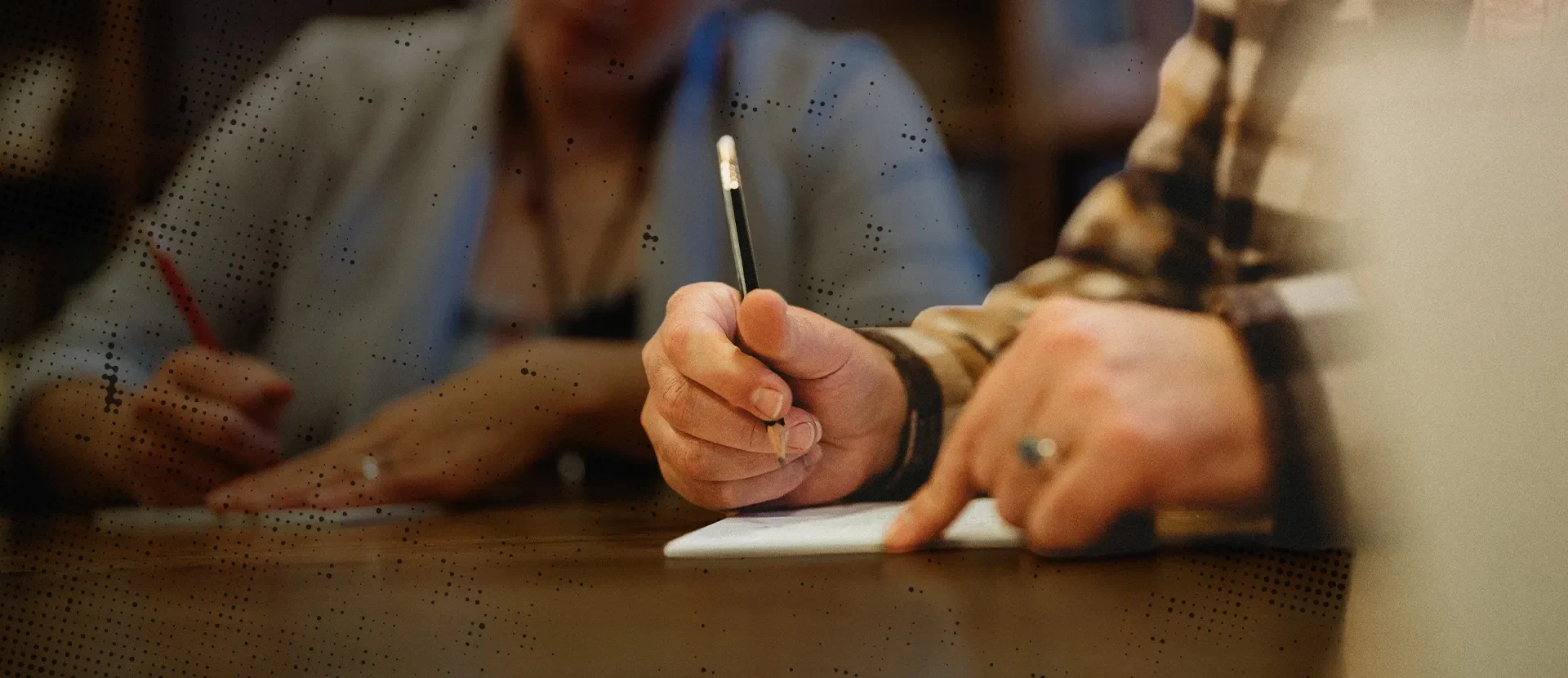
Then take some time to write a 3-5 page letter responding to one of these prompts:
Shaka begins his larger story at the critical moment when he looked himself in the mirror in solitary confinement and knew everything had to change. Was there a moment in your life when you faced something in yourself that was painful to see and knew things had to change? Describe that moment. What was happening? What had to change? What did you do?
Have you ever hurt someone deeply? A friend, family member, child, stranger? What happened? Did you not see the harm until much later? Did you carry the guilt and shame privately? Is it something you still carry, and haven't known what to do about it?
Is there something you have never opened up to talk about, but you still carry? Maybe it’s not something you did, but that was done to you, something that carries deep shame? Have you kept it to yourself for fear of being judged? Or have you never had someone who wants to hear your dark secret? This is your chance.
Some of my friends and even family members have shared heavy stuff in their letters with friends in prison – things they've never even told me! Your person in prison might be the safest person you could ever open up to. They might be your greatest confessor. They're probably a lot less likely to judge you.

BECOMING SAFE
As we said in the Art of Building Trust module, churches sadly don’t always have a reputation for being safe places. Too much hiding, too much pretending, too much fear of judgment. Even if there’s no outward culture of condemnation, churches often reward mask-wearing. It’s not a place where outsiders nor insiders feel they can bring their full self, mess and all.
But this letter you and your team are each writing—it’s not just solidarity with your incarcerated friend and not just healing for you. This is a practice in welcoming more reality, honesty, and listening to each other.
This is an exercise in disarming ourselves of judgment, and risking how we’ll be received.
Also, it’s a practice in transparency. Another reason churches aren’t safe is that we are so good at hiding things: Sunday school teachers and pastors and parishioners can commit all kinds of abuse. It festers until it eventually blows up. What if we had better practices in safely telling and hearing each other’s wrongs?
We might become places of healing rather than hiding.
ACKNOWLEDGE. APOLOGIZE. ATONE.
Those were the three steps Shaka Senghour prescribed in the video. He’s not even a Christian, but we get so numb to words like “atonement” in sermons and church contexts that we sadly haven’t become people great at practicing atonement in our world. Before we can get there, let’s start with the first part: acknowledging. How we’ve been hurt, and/or how we’ve hurt others.
What better trainer could God give you than your incarcerated friend, who’s already doing just that with you?
ACTION STEPS
Write your ‘letter of confession’ to your incarcerated friend, using the instructions above.
FOR TEAM DISCUSSION
Talk together about what you think about ‘writing your wrongs’. Does it excite you? Bother you?
What would help you each move forward and take a step to start writing something? What motivates you to open up and unburden with your underground friend?
Do you think Christians have enough opportunities to practice courageous storytelling, confession, and atonement? If not, why not?
Do you as a team want to share what you write with each other? Or just confide with your incarcerated partner?
FOR REFLECTION
