
BOOK 3: GENTLY REMOVING THE LAYERS
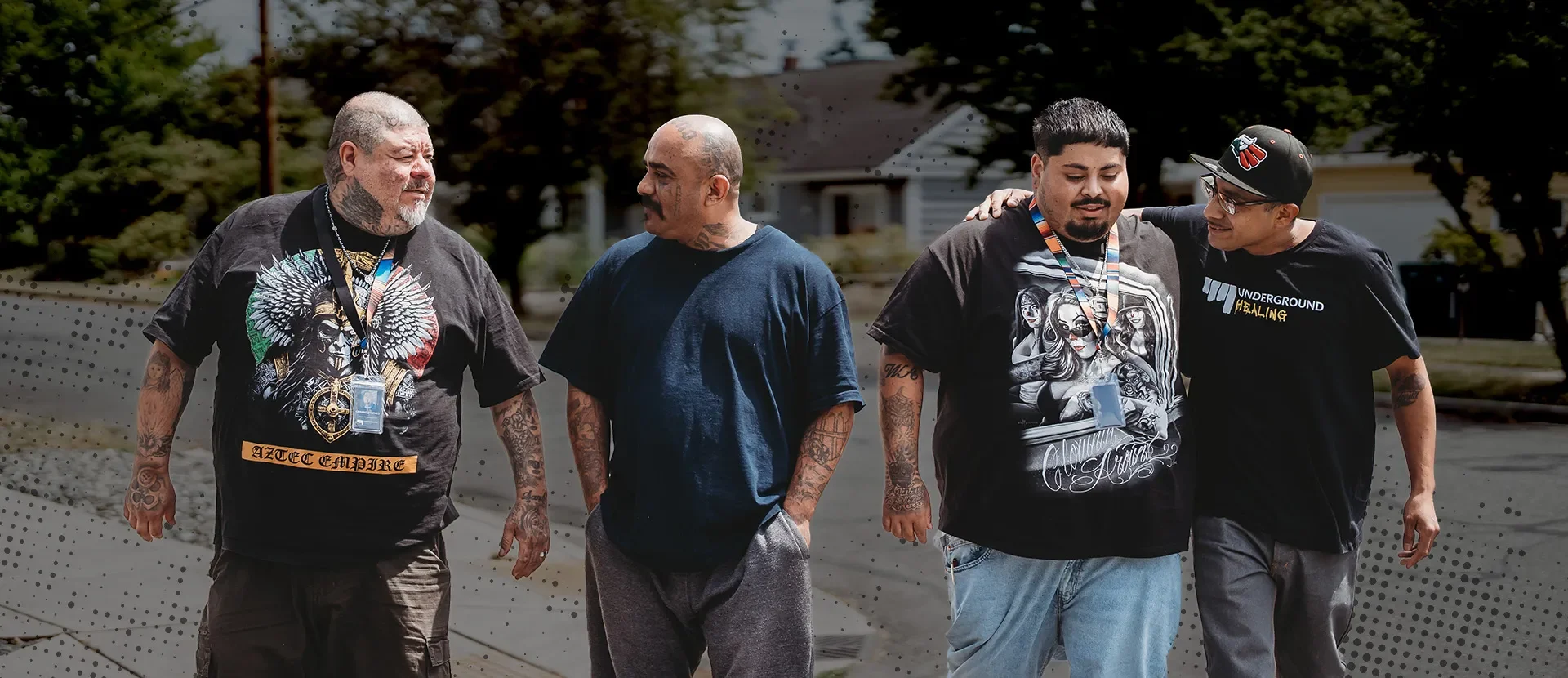
It affects all of us, and connection is how we start healing.

Yolanda Martinez from the Marshall Project
THIS AFFECTS ALL OF US
This module is not about trying to diagnose anyone or become experts in the mental health field.
It’s about starting a conversation about something both those underground as well as those walking free don’t like to talk about. Sadly, it’s not just mental illness that afflicts us and those we love. It’s also the shame and isolation of managing it alone, in silence.
So let’s jump in:
How has mental health affected you?
Do you have someone in your family who suffers with a disorder or another diagnosis? How has that affected you and your family? What helped them find some support? What made it worse? What did you learn?
Do you struggle with your own mental health? Maybe it’s crippling anxiety or long seasons of depression. Maybe you suffered a very specific trauma in your life, and the echoes of that event remain in your thoughts, your body, your relationships even now.
We recently started a conversation on trauma – a core ingredient in the lives of so many of our incarcerated community members. This is connected to that: the mental health challenges your friend may be wrestling with are often the result of trauma. They range from common mental health challenges to grave diagnoses that need urgent medical care.
Content Warning (this paragraph talks about heavy issues that could trigger strong feelings): Many One Parish One Prisoner teams have entered deeper waters with each other in this module, with church members disclosing for the first time realities they’d never shared before: a mother’s suicide that the family couldn’t be honest about in earlier generations; a memory of one team members’ father holding a gun in his mouth in front of the family forty years ago; a teenage daughter’s months spent in a psych ward.
These stories finally being shared make tears come, which unlock others’ tears.
We are all unbinding each other, removing the protective layers that hide our wounds as we get closer to God’s love here at the tombs.
CURING VS. HEALING
While we need professional help and modern medicine to navigate many aspects of mental health, we are learning that we can’t just treat mental health as a simple disease for medicine to cure or fix, to make it go away.
Our various mental health struggles often require many different types of treatment, and can be windows into great connection with each other.
This is the foundation of healing beneath addiction, illness, mental health diagnoses: tender and safe relationships where we find connection and love. Some of the most powerful medicine is the space to grieve the overwhelming losses and pains we’ve survived.
“There is a difference between curing and healing. I believe the church is called to the slow and difficult work of healing. We are called to enter one another’s pain, anoint it as holy, and stick around no matter the outcome.”
— Rachel Held Evans
Sound familiar? We stick around no matter the outcome. In an earlier module, Father Greg Boyle called that “faithfulness.” That’s what we do. We’re not out to fix everything; we do stick together. We are learning the healing that comes through faithfulness.
DISCONNECTION
Johann Hari is a British writer and journalist that you’ll hear from in the Addiction module. Below, he outlines the same basic reality beneath the many varieties of mental illness: it’s largely about DISCONNECTION.

How many of these can you relate to, even if you’ve never been diagnosed with a mental health disorder?
How many of these might be true for your incarcerated friend? Incarceration itself is an immediate disconnection from the first seven things on the list. Now think about how many experiences of being disconnected have likely been part of their life well before going to jail or prison: as an infant, a child, a teenager, during and after any significant trauma?
Christine Montross is a psychiatrist and author of Waiting for an Echo: The Madness of American Incarceration. In an excerpt from New York Times’ review of the book, she paints a vivid picture not just of the way disconnection is used as punishment, but how desperately we all seek connection as a way to survive:
“When [Montross] toured a high-security prison for male adolescents, she noticed several prisoners in single-occupancy cells striking an identical, bizarre pose: standing atop their toilets, with necks and heads contorted toward the ceiling. While Montross assumed the first person she encountered in this posture was mentally ill, it became apparent that the young men were simply attempting to converse with their neighbors through the building’s ducts. This moment, more than any other in Montross’s career, underscored ‘the fundamental need for connection,’ she writes. ‘These are children in a critical period of neurodevelopment … trying desperately not to go through it all alone.’”
(From Where the Sick Get Sicker and the Sane Are Driven Mad: Behind Bars By Justin Driver July 21, 2020, NYT – you can read the full review at the end of this module.)
QUICK QUESTION
WEBSTER’S STORY
Webster calls me (Chris) from prison all the time – multiple times a week. He calls two of his One Parish One Prisoner team members every week as well. He was released the first week of the pandemic in 2020, and the sudden state lockdowns disconnected him from his new relationships and connections. Within days, he desperately found what little connection he could: his old girlfriend, experiencing meth addiction, whom he swore he’d never go back to. He relapsed on drugs, in part because losing his sobriety wasn’t as bad as being alone.
As a baby, Webster “was born kicking heroin,” as he says. His mother was a victim of sex trafficking and numbed her daily nightmare with heroin. Webster was fearfully and wonderfully made inside a womb of trauma, stress chemicals, and heavy opiates. In his formative years as a helpless baby, he had little connection with his suffering mother, who passed on the abuse she endured from other men by kicking, slapping, and abandoning her little boy. Webster spent most days of his childhood entirely alone in an apartment. Disconnected.
As you might imagine, Webster has had some big mental health struggles as an adult.
When he first started One Parish One Prisoner and began writing letters to his local team, he — God bless him — shared his entire childhood story in many handwritten, misspelled, heartbreaking looseleaf pages. He’d found people who were capable of caring for him! And they did. He found safe relationships who wouldn’t hurt him. Several retirement-age women on the team offered maternal care that he attached to instantly.
One of them took Webster to the animal rescue center, where they walked abandoned dogs for an hour.
One day on a walk together beside my favorite creek near his recovery home, I told Webster that I needed anti-anxiety meds for a season of my life.
“Really? You?”
I told him about a season in my twenties when I was suicidal. He didn’t smile upon hearing this, but his very tattooed face seemed to brighten, or open. He seemed to breathe more fully. “I never would have guessed that you struggled with that too, bro.” I told him that sadly, people in the church often just hide our problems better. And that talking with him helps people like me open up and tell our own stories.
On the walk back through the forest, he called to schedule his mental health evaluation. He hadn’t wanted to, but removing the shame was the main issue.
Connection is healing.
The next day the state lockdowns began, and that first week everyone was scrambling, trying to prepare, learning how to quarantine. We failed Webster over those next several weeks. He never got the care he needed.
So Webster is now back in prison — on drug and probation violations — and the disconnection from others is unbearable. He’s disconnected from his team, his daughter, his new habit of walking to the creek I’d shown him near the recovery home. On his prison tier of cells, he fights the temptation to collect-call his old girlfriend by trying to call his new friends on his One Parish One Prisoner team instead. And me. When he can’t get through to us, when we are too busy, it hurts. Sometimes he feels so rejected, he rejects us by removing us from his Securus account.
He used to have a good mental health counselor inside the prison unit. Now that he’s back, she’s taken a different job elsewhere. It’s not easy to be a caring professional and survive working inside a prison. So Webster now has even less mental health care.
This is part of our journey approaching the tombs: getting our hearts broken. Jesus wept at the tomb for his friend Lazarus. We are becoming the shape of God’s heart.
MENTAL HEALTH IN PRISONS
In recent decades, our society has handled mental illness by shutting down mental health institutions across the country and letting the most un-well in our communities find their way into prisons instead, via arrest—after self-medicating through illegal drugs or harming themselves or others.
Prison facilities make mental health worse: there’s less safety, more violence, more disconnection.
Below is another insightful excerpt from the review of Waiting for an Echo:
“[Montross] accepted a position with a psychiatric hospital in Rhode Island. It did not take long, however, for her to realize that her tidy binary—dividing the guilty criminal from the innocent patient battling mental illness—was a crude one, belied by complex realities. Many psychiatric patients, she observed, had previously served time behind bars, with some being admitted to her hospital only hours after being released. When she noticed that a few of her regular patients had not come to the hospital for surprisingly long stretches, she began searching state records and often discovered that they were in jail or prison. ‘The distinction I once imagined between hospital and prison populations exists only faintly,” she reflected, “when it exists at all.’”

(From Where the Sick Get Sicker and the Sane Are Driven Mad: Behind Bars By Justin Driver July 21, 2020, NYT – you can read the full review at the end of this module.)
YOU’RE CREATING CONNECTION
Here’s the good news: You as a team — without being mental health professionals — can offer the most healing antidote to disconnection. You are already doing it! You are creating connection. Do you see how precious and powerful this relational work is? See how healing your faithful monthly team meetings are, and your regular letters and calls and visits?
As a small “Department of Connections,” you are creating an environment of mental health together.
Hopefully your growing connection with your incarcerated friend is creating some of that healing inside you as well.
MEDICATION
Let’s talk meds.
Ask your incarcerated friend if they are on any mental health meds right now, in prison. If so, write it down.
Many folks like Webster will tell us they don’t want to be on these meds when they get out. They make them feel “drowsy” or unlike themselves.
It’s true: prisons notoriously over-drug to sedate the people inside. It’s not good. But we assure our releasing friends: there’s better mental health care out here.

Yolanda Martinez from the Marshall Project
Going cold-turkey off mental health meds puts the brain on a roller coaster right when it needs all the stability and support it can get.
So, team member who’s working in the HEALTH SYSTEMS role: make sure you help your friend make that mental health evaluation their first couple weeks out, to set up prescription continuity.
We don’t want the cultural shame and stigma around mental health care to sabotage our friend’s courageous and fragile journey out of the underground.
OUR OWN EXPERIENCE
We unbind each other from these layers of shame and silence — like Lazarus’ grave clothes — by sharing our own experiences with each other.
Start now: In your letters, in your calls with your incarcerated friend. Before getting into their meds or diagnoses, start with your story. How you struggle, how you stay sane, what’s helped you or your family with mental health challenges.

In this way, maybe you — like one of our One Parish One Prisoner team members Erin and her releasing friend Wally, who learned to confide in each other about their challenging diagnoses and regular struggles — can become “mental health buddies” too.
ACTION STEPS
Tell your incarcerated friend about your experience with mental health. Start the conversation. Write the letter this week or make the call.
HEALTH SYSTEMS ROLE: Ask about meds and discuss setting up all their health appointments and evaluations when they get out. Remind them that you’ll do it together.
FOR TEAM DISCUSSION
Tell each other the stories: your experience with mental health in your own or your family’s life.
Link to the NYT Book Review:
https://www.nytimes.com/2020/07/21/books/review/waiting-for-an-echo-christine-montross.html
Where the Sick Get Sicker and the Sane Are Driven Mad: Behind Bars
By Justin Driver | July 21, 2020
WAITING FOR AN ECHO: The Madness of American Incarceration
By Christine Montross
When Christine Montross approached the end of her residency program in psychiatry, she met with a mentor for help evaluating two attractive job opportunities. Ignoring both options, her adviser raised the possibility of a third: “What about the prisons?” Montross balked at this unsolicited, unwanted suggestion. She deemed it an imprudent, even absurd use of her training, given the nation’s dearth of psychiatrists and broad demand for mental-health services. “Why would I want to work in the prisons?” Montross wondered. “Why devote my time and attention to people who had committed crimes when there were so many innocent people who needed care?”
She accepted a position with a psychiatric hospital in Rhode Island. It did not take long, however, for her to realize that her tidy binary — dividing the guilty criminal from the innocent patient battling mental illness — was a crude one, belied by complex realities. Many psychiatric patients, she observed, had previously served time behind bars, with some being admitted to her hospital only hours after being released. When she noticed that a few of her regular patients had not come to the hospital for surprisingly long stretches, she began searching state records and often discovered that they were in jail or prison. “The distinction I once imagined between hospital and prison populations exists only faintly,” she reflected, “when it exists at all.”
This realization prompted Montross to start exploring how the American legal system manages mental illness. Initially, she visited jails to assess whether criminal defendants were competent to stand trial. Those competency evaluations led her to broaden her investigation and, eventually, to write “Waiting for an Echo,” a haunting and harrowing indictment of the deep psychological damage inflicted by the nation’s punitive structures. “Incarceration in America routinely makes mentally ill people worse,” Montross contends. “And just as routinely it renders stable people psychiatrically unwell. Our system is quite literally maddening.”
Montross is a gifted, often compelling storyteller. She opens her book with an explanation of how the whims of police officers can lead two similarly situated people battling psychosis to experience divergent, life-altering fates. If one officer delivers someone exhibiting psychiatric symptoms to a mental hospital, that person may receive the treatment required to stabilize and improve. But if another officer delivers someone exhibiting the same symptoms to jail, that person enters a world almost perfectly calculated to exacerbate despair.
To illustrate this point, Montross recounts the history of a jailed man she calls Henry. Following Henry’s arrest, he refused to leave his cell, perhaps owing to paranoia. This refusal led correctional officers to subject him to a “cell extraction,” an anodyne term for a vicious practice. Predictably, Henry disliked the experience, and expressed his displeasure by striking the extractors. These blows could be deemed an assault on an officer, rendering Henry vulnerable to an extended stay in solitary confinement, which would, of course, only further harm his already precarious mental state. Moreover, if convicted of the assault, Henry could face imprisonment for more than a decade — ample opportunity to accrue additional charges and punishment.
Montross traveled extensively across this country, bearing witness to how jails and prisons both initiate and intensify mental illness. The strongest portions of her searing book appear in its parade of alarming vignettes. I will not soon forget some of her grotesque images. When she toured a high-security prison for male adolescents, she noticed several prisoners in single-occupancy cells striking an identical, bizarre pose: standing atop their toilets, with necks and heads contorted toward the ceiling. While Montross assumed the first person she encountered in this posture was mentally ill, it became apparent that the young men were simply attempting to converse with their neighbors through the building’s ducts. This moment, more than any other in Montross’s career, underscored “the fundamental need for connection,” she writes. “These are children in a critical period of neurodevelopment … trying desperately not to go through it all alone.”
At another facility, the Northern Correctional Institution, a “supermax,” built in Connecticut in the 1990s, Montross commented on the noise in a particularly cacophonous ward. A white nurse accompanying her replied: “I call this the monkey house.” Montross recoiled at the racist remark, which transformed a unit teeming with Black and brown men into beasts. Even by the grim standards of prisons, Montross found Northern’s layout forbidding. This ominous ambience, it turns out, was no accident. In a chilling passage, she notes that the facility’s architect has publicly boasted that it was specially designed to elicit alarm and distress from its inhabitants. Most are confined to their cells for 23 hours a day. In such reprehensible conditions, the marvel is less that some men are driven mad than it is that any retain their sanity.
But Montross’s typically formidable narrative skills sometimes go awry, most notably when she shoehorns herself and her family into the story. One woman she encounters recalls being given crack cocaine at 11. This fact prompts Montross to insert a sustained riff about her daughter’s very different life at that age — one filled with Harry Potter, woven ankle bracelets and ice-cream cones. Elsewhere, in an effort to underscore the eternity of a 10-year prison sentence, Montross details the life events that have occurred during her last decade. Her “partial list” includes not only major occurrences but “10 autumns of raucous college Saturdays — a period during which my beloved Michigan Wolverines cycle through three head coaches and hordes of forgettable quarterbacks, and a point in every season when I’m lying on the floor and moaning after yet another interception and my children giggle uncontrollably at my agony.” Such passages needlessly distract from the gravity of her subject.
This tendency reaches its nadir in the book’s conclusion, where Montross recollects writing at a lake cottage during winter and wrestling with how to handle a coyote outside her window that is behaving strangely. The episode stretches over five pages and produces at best a modest payoff: a belabored analogy for society’s response to the spectacle of mental illness, the way we allow fear and a desire for control to overcome more humane impulses. “Waiting for an Echo” would have been improved had these discursions been excised.
Montross’s travelogue-based approach may also leave some readers pining for a comprehensive treatment of this issue, one more attentive to scholarly debate. They would do well to secure a copy of Alisa Roth’s “Insane: America’s Criminal Treatment of Mental Illness.” That book, published two years ago, covers similar terrain from a more broad-gauge perspective. Yet Montross’s stumbles should not overshadow her significant achievement. I hope that she successfully pricks the nation’s conscience about our shameful punishment of mental illness. It is impossible to read her captivating account without concluding that our various departments of corrections are themselves in intense need of correcting.
Justin Driver is a professor at Yale Law School and the author of “The Schoolhouse Gate: Public Education, the Supreme Court, and the Battle for the American Mind.”
WAITING FOR AN ECHO: The Madness of American Incarceration
By Christine Montross, 331 pp. Penguin Press.
FOR REFLECTION
