
BOOK 1: RELATIONSHIP WITH THE UNDERGROUND
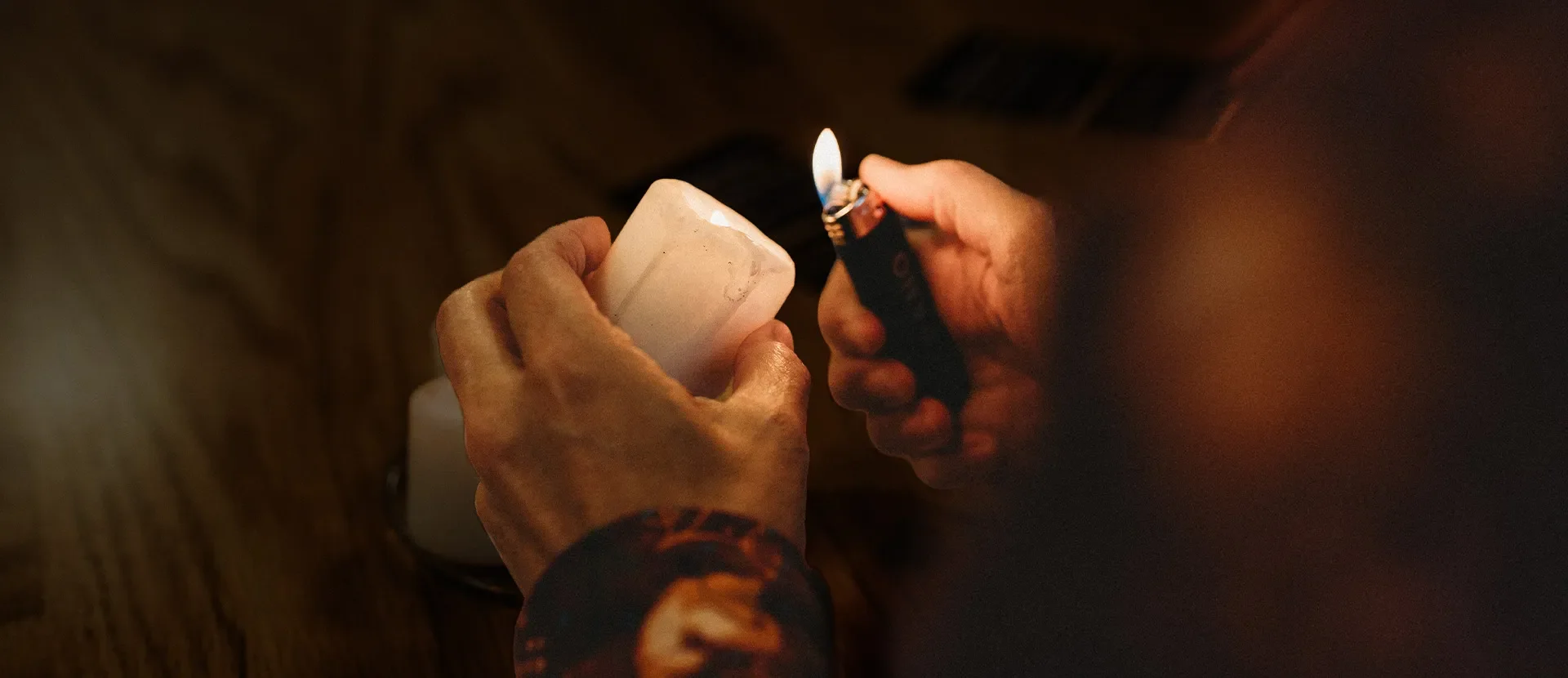
We join the journey of transformation when we open the locked doors within ourselves.
“If we do not welcome our own wounds, we will be tempted to despise the wounded.”
— Father Gregory Boyle
RELATIONSHIP WITH THE UNDERGROUND
This first segment (we call this group of modules a book) of our journey is called “Relationship With the Underground.”
You started with writing letters. Now you’re making phone calls, having video chats, and maybe visiting the facility where your friend is locked up. In all this, you’ve been “approaching the tombs” of society—prisons—and reaching out with friendship to someone who is experiencing incarceration—someone with wounds, with a complicated history.
You are learning how to welcome a part of your community who’s been cut off, thrown away.
It’s an ancient practice for human societies to bury what is unwanted. But when we open ourselves to the kind of God we see in Christ—who heals the wounded, embraces the outcast, and even raises the dead back to life—we learn to hold close what was previously unwanted and buried.
This “underground” isn’t just tombs and prisons out there.
We have our own personal underground, deep inside, where we bury certain parts of ourselves: our wounds, our complicated histories, our sins and secrets. We press them down beneath the surface, removing them from sight. Psychologists might call this our subconscious: we repress what we cannot face. We have our own practices of punishment, control, and lockdown inside. How do we enter into an honest relationship with our own underground?
This month we will be looking more closely at the Welcoming Prayer (from the start of your monthly meetings) as a way to practice, and more deeply experience for ourselves, the same kind of love we’re extending to our incarcerated brothers or sisters.
“There’s a crack, a crack in everything. That’s how the light gets in.”
— Leonard Cohen
QUICK QUESTION
HOLDING STILL
Enjoy this short documentary, “Holding Still”. It takes us inside Folsom Prison in CA, with two groups who practice contemplative prayer.
REPRESSION
Several years ago, I visited Old Folsom Prison in California, where Johnny Cash had his famous concert. I entered the old fortress with Ray Leonardini, who has been practicing contemplative prayer with the men inside there for many years. I had always been skeptical of the sitting-in-silence-for-a-long-time kind of prayer—I had seen it used as a snobbish hobby of spiritual elites and retirees and introverts—but I wanted to see how it worked with incarcerated populations.
Once the guards waved their metal detector wands over our bodies, we passed through heavy, clanging, wrought-iron gates, then down zig-zagging flights of steel stairwells, presenting our volunteer badges at another underground checkpoint of locked gates.
The prison was built down the backside of a ravine, so down and down we went—through loud tiers of prison cells that I recognized from multiple action movies filmed in the California facility. Men shouted, taunted, and barked at us from behind bars, an understandable reaction to being caged like animals before a constant parade of outside visitors. We descended down more tunnels and stairwells, emptying out onto the chain-link-fenced yard, mixing with the general population of hundreds of men lifting weights and playing handball, until we finally reached Graystone Chapel, at the very bottom of the prison.
Inside it was eerily quiet.
The men in the contemplative prayer group had arranged 75 chairs in an open circle. They welcomed me—some with great kindness, others with skepticism.
After Ray made some introductions across the immense circle, he helped us prepare for twenty minutes of absolute stillness before God. His last words to us were: “Words are how we use religion to control the narrative and protect ourselves. In silence now, let’s go beneath the story we tell ourselves.” The prayer bell rang softly and we entered the silence together.
In twenty minutes of startling silence, I heard noises from the yard outside the chapel. I thought of the many chambers we’d passed through in our journey down to the bottom of this prison. It struck me that the journey down into our own hearts is not so different. The descent into prisons and the descent into our inner shadows is the same lengthy, tricky journey. It takes some work.
Here inside this prison, in the stillness, in prayer with the men, I realized I was inside the nation’s subconscious, where we as a people have tried to bury our problems: our domestic violence, our gun violence, our many addictions, our racism, our mental illnesses, our sexual brokenness, our poor — all of the problems we want to ignore and hide and erase, all that feels too hard to heal.
Hours later, as we left the fortress and headed toward our cars, I looked back at the famous entrance with the prison address spelled out in brass letters on the stony facade. That’s when I noticed the name of the town the prison sits in: REPRESA, CA.
God’s love reaches downwards, through our locked doors and systems of repression, and finds us. God brings us together and heals us there.
“I had always imagined God to be in the same general direction as everything else that I valued: up.
I had to be forced underground before I could understand that the way to God is not up but down.
The underground is a dangerous but potentially life-giving place to which [a deeply challenging experience] takes us; a place where we come to understand that the self is not set apart or special or superior but is a common mix of good and evil, darkness and light; a place where we can finally embrace the humanity we share with others.
That is the best image I can offer not only of the underground but also of the field of forces surrounding the experience of God.”
— Parker Palmer, from Let Your Life Speak
PRACTICING WELCOME WITHIN
We’ve made it part of every One Parish One Prisoner team meeting to start with a few minutes of this gentle practice: sitting in stillness and silence together before God, learning how to unlock doors within us and extend welcome to our own messy selves—without trying to pep talk or, as my friend José coached me from his solitary cell for years, “not sugar-coating shit”.
Try reading it aloud now, slowly. Which part seems hardest?
I welcome everything that comes to me in this moment because I trust it can be part of my healing.
I welcome all thoughts, feelings, emotions, persons, situations, and conditions.
I let go of my desire for approval.
I let go of my desire for control.
I let go of my desire for false security.
I let go of my desire to change any situation, condition, person, for myself.
I am open to the love and presence of God, and the healing action and grace within.
Whether you have one person read The Welcoming Prayer aloud or read it all together, this shared prayer is how every team meeting begins and ends. We encourage you to read it once, spend 3-5 minutes in centering silence together, then repeat the prayer again.
As you sink into the silence in between, try holding ontojust one word or phrase that resonates from the prayer—and let your brain relax. Just breathe that one word or phrase in and out. Let it be a key that unlocks layers of stresses from the day, neglected emotions, joys or unpleasant memories. Let it come up and let it go. Nothing important or profound needs to happen.
We are learning to let go of control, learning to trust God to love us in ways we can’t control or manipulate.


If the silence feels uncomfortable at first, you’re not alone! That’s why we’re doing this: we’re slowly learning how to sit with things that make us uncomfortable; how to exist with our own messiness and not run from it. We resist the impulse to shame, correct, fix, punish, or push parts of ourselves away.
Over time, we might also get better at sitting with other people’s messiness, and not running from them, either.

@scottthepainter
“I STILL LOVE CONTROL”
Whenever we at Underground Ministries get to sit in on a monthly meeting with different One Parish One Prisoner teams, we look forward to the time of reflection after the silence: What stands out to you as we practice this welcoming prayer?
One deacon at a large Catholic Church confessed and laughed. “That part about letting go of the desire for control: I realize how much I still love control!” They were deep into their second year with their releasing friend Wayne, who was making some unwise decisions with money and leaving the recovery house where he was staying. “I want to just tell Wayne what to do! I want to solve problems.”
Everyone in the group nodded.
“Maybe this is how Wayne has felt in prison for so many years,” another team member mused: “I mean, learning to let go of trying to control everything.”
Another team member remembered when they were first getting started, getting to know Wayne through his prison letters and collect calls. “I could only receive calls from Wayne in prison. I couldn’t even control the communication! That’s when I started wondering if Wayne actually has a lot to teach us about not being in control all the time.”
Prison relationships can be the perfect way to practice this letting-go of control.
“Welcome to the descent.
As we slip down deeper and deeper, I invite you to remember . . . that it is not in perfection that we reach the divine, but through the gateway of our mistakes and our suffering.
We abandon the self-improvement project and instead surrender to the Holy Fire.”
— Mirabai Starr
“I JUST WANT TO FIX THINGS”
“As a mom, I just want to fix things,” another member of that team shared. “I can burn myself out trying to fix every problem our releasing friend is facing, then I want to give up and quit. But when we start each meeting with this Welcoming Prayer, each time, I’m like, Ah! How can I welcome this situation for part of my growth and healing? It’s helping me let go of my instincts to control his life—and just love him. It’s helping me open myself to God doing something deeper in me. In us.”
Of course, the community rolling away the stones and Jesus raising Lazarus from the dead ARE a kind of fixing, a changing of reality. We DO want to correct injustices in society and fix problems in the legal system. But we are learning that most of the time, it’s our own anxious impulses to control outcomes and people that keeps us from loving, from feeling deeper heartbreak, and from seeing the larger picture.
“What if we’re trying to control Wayne’s life because WE don’t want to get heartbroken?” a young man spoke up for the first time that night. “We want to keep Wayne from messing up . . . so it doesn’t let US down. So we don’t feel like failures. So we don’t look bad. What’s the prayer say? ‘I let go of my desire for approval.’ I’m starting to see how much of what I do isn’t motivated by love as much as concern for how people look at me.”
Only by slowing down, welcoming what’s below the surface and reflecting together, can we see what’s happening inside of us.
Alex, home from twelve years in prison, much of it in gang units and solitary confinement, recently told a new crew of One Parish One Prisoner teams:
“God was always in my heart. But with the life I was caught up living, with the messes I've made, I had to deal with my shame and insecurity before I could fully see God inside me.
I had to let that stuff come to the surface—and let it go.”
We become safer people—to each other, and especially to the outcasts in our community, when we’re honest about our self-protective desires. We are less afraid of each other and ourselves. We become more like Christ—the shape of God’s heart out in the world.
“Any spiritual journey . . . will take us inward and downward, toward the hardest realities of our lives, rather than outward and upward toward abstraction, idealization, and exhortation. The spiritual journey runs counter to the power of positive thinking.”
— Parker Palmer, from Let Your Life Speak
SLOWING DOWN
It’s possible your team has slipped into starting your meeting with casual conversation about your releasing friend’s latest news, and the group has slowly turned into just a fixing committee. We timed this module several months into the journey to help you come back to the intended rhythm of starting with this prayerful silence, before God. We descend to a deeper place together, and our action afterwards is different.
“Prayer and action can never be seen as contradictory or mutually exclusive.
Prayer without action grows into powerless pietism, and action without prayer degenerates into questionable manipulation. If prayer leads us into deeper unity with the compassionate Christ, it will always give rise to concrete acts of service. And if concrete acts of service do indeed lead us to a deeper solidarity with the poor, the hungry, the sick, the dying, and the oppressed, they will always give rise to prayer.
In prayer we meet Christ, and in him all human suffering. In service we meet people, and in them the suffering Christ.”
— Henri Nouwen
This module is an invitation to let Christ reach the hidden, locked up, suffering, and scared parts inside ourselves. As we practice welcoming and not rejecting our private realities, we’ll get better at welcoming the people and realities Christ is bringing to life from our communities’ streets and prisons.
“Dwelling deep within all our souls is this undeniable, inexhaustible wellspring of love, wisdom, and goodness. If we can’t uncover and see this essential purity in ourselves, then everyone we see is ugly, limited and not measuring up. So how do we make contact with this?”
— Father Gregory Boyle
These kinds of prayer practices are just another way to practice such resurrection.
ACTION STEPS
PRINT & MAIL THIS MODULE TO YOUR FRIEND
You received a copy of The Welcoming Prayer in their One Parish One Prisoner Starter Kit. Write a letter or share a phone call about your experience with it. Ask if they’ve tried praying or meditating with it. Consider—like some participants have done—making a time each week to sit with the prayer, knowing you’ll both be in silence together.
CONGREGATIONAL CONNECTION: Ask your pastor if you can lead this prayer at church this month.
FOR TEAM DISCUSSION
Talk with each other about which part of The Welcoming Prayer feels most challenging to you personally.
As you open yourself to someone in prison, and open yourself to silence, are there deeper parts of you that seem to be “coming up” to the surface? If so, do you feel you can share it with your team? With your incarcerated friend?
FOR REFLECTION
